

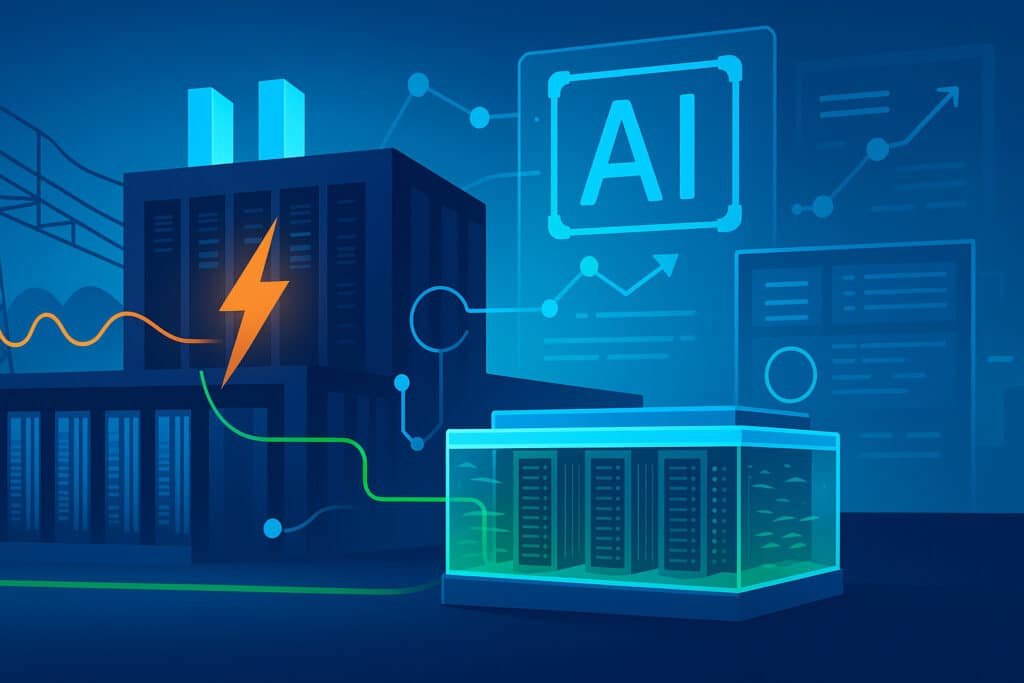
For most of modern history, specialized financial management belonged strictly to institutional players. Wall Street banks housed massive mainframes to crunch market data while retail investors balanced paper checkbooks on their kitchen tables. We have watched that gap collapse over the last decade. The sheer computational power required to analyze global markets no longer sits exclusively behind locked doors in Manhattan office buildings. It resides in the phones in our pockets and the cloud networks we access every day.
This shift goes far beyond simple convenience. Moving from physical ledgers to digital access changed how we view our bank balances. The current transition from passive digital tracking to active computing is changing how people approach market strategy entirely. The tools formerly reserved for high-frequency trading firms are slowly finding their way to individual operators. Understanding the mechanics behind this shift offers a clear view into where personal finance is heading next.
The Shift from Manual Spreadsheets to Probability Engines
If you look back at early personal finance software from the late 1990s and early 2000s, the primary function was historical recording. You entered your expenses. The software categorized them. It provided a neat pie chart showing where your money went last month. It was a digital filing cabinet. The math involved was basic addition and subtraction.
Modern computational models approach money from the opposite direction. Instead of merely recording the past, they use historical data to build probability models for the future. We see this commonly referred to as Monte Carlo simulations. A Monte Carlo simulation takes a set of financial variables and runs thousands of randomized mathematical scenarios to figure out the most likely future outcome. If a user wants to know if their current saving rate will survive a market downturn, the computer runs ten thousand simulated market crashes to test the portfolio.
This transition turns static spreadsheets into probability engines. These engines constantly adjust their own outputs based on live data feeds. When an interest rate changes, the probability model shifts instantly. The human mind struggles to visualize thousands of variable outcomes at once, but modern processors handle these calculations in fractions of a second. This capability forms the bedrock of modern algorithmic market analysis.
Addressing the Speed and Data Processing Gap
The global financial system never completely closes. When traders in New York leave the office, markets in Tokyo and Sydney are highly active. Cryptocurrency networks operate twenty-four hours a day, seven days a week, with absolutely no closing bell. A human being inevitably needs to step away, sleep, and disconnect. The machine does not.
This reality highlights the massive speed and processing gap between human operators and modern tech infrastructure. A retail trader trying to follow the daily news might read three or four financial articles over a cup of coffee. During that same fifteen-minute window, a dedicated processing server can digest thousands of pricing changes, volume spikes, and statistical deviations across hundreds of different market sectors. The machine identifies mathematical anomalies that the human eye would completely ignore.
Speed also applies to execution. Finding a good entry point in a volatile market requires exact timing. By the time a person sees a favorable price, logs into their brokerage account, enters a trade size, and clicks a button, the market has often already moved away from them. Automated systems strip out this hesitation latency. They detect the target price and execute the order through direct application programming interfaces in milliseconds. This bridges the physical gap that historically put individual operators at a massive disadvantage against large firms.
The Mechanics of Algorithmic Market Analysis
To understand the practical application of this processing power, we have to examine the actual mechanics of algorithmic market analysis. An automated system runs on a highly structured set of mathematical rules. These rules dictate when to stay out of the market, when to enter, and exactly how much capital to deploy based on current volatility metrics.
The sequence typically begins with data ingestion. The software connects to various exchanges and pulls live pricing and volume data. It then applies technical indicators to this raw data stream. The software might look for a specific moving average crossover, where a short-term price trend crosses above a long-term price trend. It might measure the exact standard deviation of a price swing to determine if an asset is statistically overbought. If the data alignments match the programmed criteria, the software moves to the execution phase.
Once a signal triggers, the automated system handles the rest. For those looking to incorporate this technology, platforms like Quantum AI provide direct access to automated systems built to handle these precise execution requirements across global asset classes. The software calculates the trade parameters, sets the boundaries, and submits the order directly to the connected exchange without requiring manual intervention from the account holder. This mechanical approach removes the emotional hesitation that frequently sabotages manual trading efforts.
Redefining Risk Management Through Better Math
Perhaps the most significant advantage of next-generation computing in personal finance involves capital protection. Human beings are notoriously terrible at managing risk. When an asset drops steeply in value, fear takes over. People often sell at the absolute bottom of a downward swing to stop the pain. Conversely, when an asset climbs rapidly, greed kicks in. People buy at the absolute top expecting the climb to last forever.
Mathematical models do not feel fear or greed. They operate strictly on predefined risk parameters. Before an algorithmic system ever enters a market position, it determines the exact exit point if the trade goes poorly. This relates directly to position sizing. A computational model might dictate that no single market action should risk more than one percent of the total account equity. If the market becomes chaotic, the system automatically shrinks its position sizes to maintain a steady risk profile.
Advanced systems also employ dynamic trailing stops. A standard stop-loss order sits at a fixed price below the current market value. If the price falls, the asset is sold. A trailing stop behaves differently. As an asset climbs in value, the mathematical model constantly recalculates the stop price, moving it higher to protect new gains. It relies on real-time volatility measurements to give the trade enough breathing room to develop while strictly capping the downside exposure.
The Role of Advanced Security Protocols
With great computational access comes the absolute requirement for heavy security infrastructure. Financial data represents a prime target for malicious actors. If everyday people are going to trust software with their market exposure, they have to understand the specific protocols keeping their funds safe.
Modern finance technology heavily utilizes application programming interfaces. When a user connects automated software to their brokerage or exchange account, they use specific keys. These keys are heavily encrypted and configured for restricted access. They allow the software to read account balances and place orders, but they physically prevent the software from initiating any withdrawals or transfers. The user maintains complete control over the actual custody of their funds.
Hardware-level protections also play a large role. The server clusters running these complex probability engines utilize end-to-end encryption. Any data passing between the user network, the software server, and the actual market exchange gets scrambled mathematically. Even if a third party intercepts the data packet, they receive nothing but randomized alphanumeric text. This architecture ensures that computational speeds never come at the expense of baseline account security.
Navigating the Common Pitfalls of New Technology
The introduction of high-end computational tools to the retail market brings tremendous advantages, but it also creates specific new hazards. Adopting automated systems without understanding their underlying mechanics leads to very common mistakes. People transitioning from manual methods frequently misunderstand how to interact with probability engines.
- The Set-and-Forget Fallacy: Algorithmic tools require monitoring. They handle the execution and the math, but the user must manage the overall strategy limits. Assuming a system will perform perfectly with zero oversight often leads to compounding errors during extreme market events.
- Ignoring Transaction Mechanics: Automated platforms can execute hundreds of actions a week if programmed aggressively. Beginners often forget that every single execution carries a spread or a base fee. A model might show theoretical gains while slowly bleeding actual capital through heavy execution costs.
- Manual Interference: The math is designed to weather statistical drawdowns. When users see a temporary drop in value, they often panic and manually shut down the software right before the mathematical recovery model kicks in. This ruins the statistical probability the machine relied upon.
- Chasing Outlier Returns: Users sometimes configure math models to target aggressive historical anomalies. Just because an asset jumped dramatically in the past does not mean a strict mathematical formula can safely capture that exact movement again. Modest, steady configurations generally survive longer than overly aggressive setups.
By studying how the machine actually views the market, users can avoid fighting their own software. The goal is to let the tool manage the complex variables while the human operator determines the broad stroke risk tolerance.
Understanding the Boundaries of Automation
Computation power provides heavy operational advantages. It does not provide absolute certainty. We have to separate the marketing hype from the hard reality of financial probability. No technology can guarantee a profit. The market remains an incredibly complex organism driven by geopolitical events, corporate earnings, central bank decisions, and unpredictable human behavior.
A computational model simply tilts the probability curve in your favor. It manages downside exposure meticulously. It acts on mathematical realities faster than a human could physically move a mouse. However, when rare black swan events happen, even the strongest algorithms struggle to parse the sudden breakdown of historical correlation. Understanding these boundaries creates a safer operating environment for the end user.
Users must view algorithmic assistance as a heavy piece of machinery. A power tool drives a nail much faster and much deeper than a manual hammer. It still requires a knowledgeable operator pointing it in the exact right direction. When retail participants approach trading technology with a sober, realistic mindset, they are far more likely to experience long-term utility.

Juliet Hartfield is an inspiring writer based in the scenic town of Stratford-upon-Avon, UK. With a degree in Creative Writing from the University of Warwick, Juliet’s work effortlessly blends vivid storytelling with deep emotional resonance. Her blog covers a spectrum of topics, including literature, mindfulness, and the arts, captivating readers with her eloquent and heartfelt prose.
Juliet enjoys painting, exploring nature trails, and participating in community theatre outside of writing. Her passion for the arts and the outdoors enriches her writing, offering a unique and refreshing perspective.